As international passenger travel continues to grow, airport customs authorities face a persistent challenge: detecting illicit contraband—including narcotics, weapons, tobacco, endangered species, raw food materials, and undeclared currency—without creating unnecessary delays for legitimate travelers.
After three years of collaborative research, development, and live airport field testing, BAG-INTEL has officially drawn to a close. Bringing together 24 international partners—including customs authorities, law enforcement agencies, research institutes, and technology providers—the project delivered a suite of artificial intelligence (AI) and computer-vision capabilities designed to support customs officers during baggage screening and inspection workflows.
Solving the Baggage Re-Identification Dilemma

Standard airport customs procedures rely on non-intrusive screening equipment (X-ray/CT) to detect suspicious luggage. However, re-identifying a specific bag once a passenger collects it from a crowded arrival carousel has traditionally required manual physical tagging or RFID markers.
The traditional approach presents several operational and practical drawbacks:
- Evasion: Smugglers may notice physical tags and remove them before reaching the customs area.
- Damage: Physical or RFID tags carry a risk of damaging passenger luggage during removal.
- Operational Costs & Waste: Manual tagging increases labor requirements, generates recurring expenses, and creates single-use waste.
- Administrative Burdens: Tags have to be removed post-inspection to ensure travelers are not mistakenly flagged on future trips.
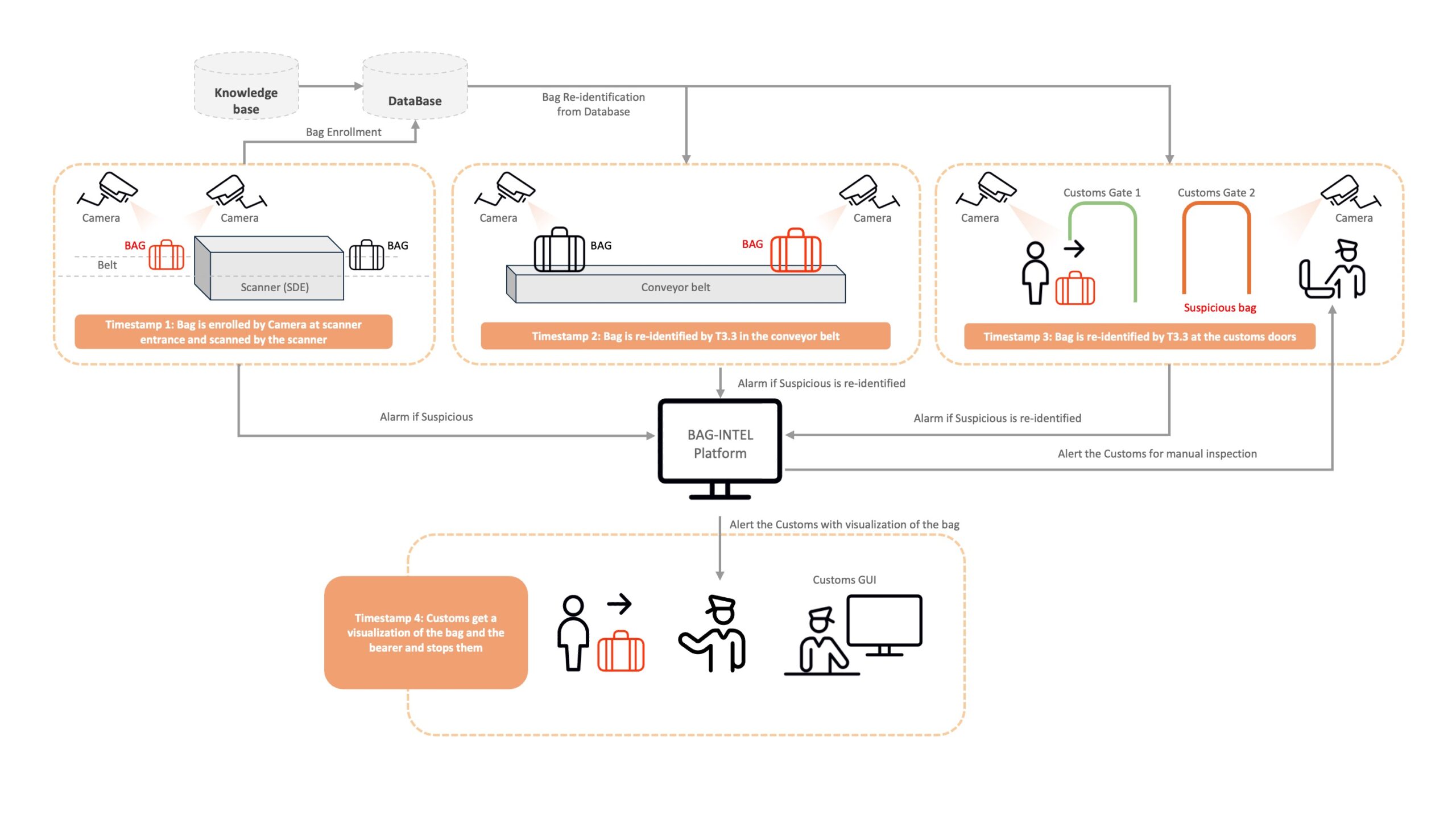
To tackle these issues, BAG-INTEL developed a tagless, camera-based re-identification system. Utilizing computer vision algorithms, high-resolution cameras were configured to track flagged bags continuously from the scanner to the arrival hall, enabling customs officers to perform targeted manual inspections without placing physical markers on baggage.
Core Technological Achievements
The BAG-INTEL integrated architecture was built around three primary technological components:
- Tagless Re-Identification: Continuous AI camera tracking designed to recognize flagged luggage across multiple airport terminal zones without physical tags, human intervention, or baggage flow interruptions.
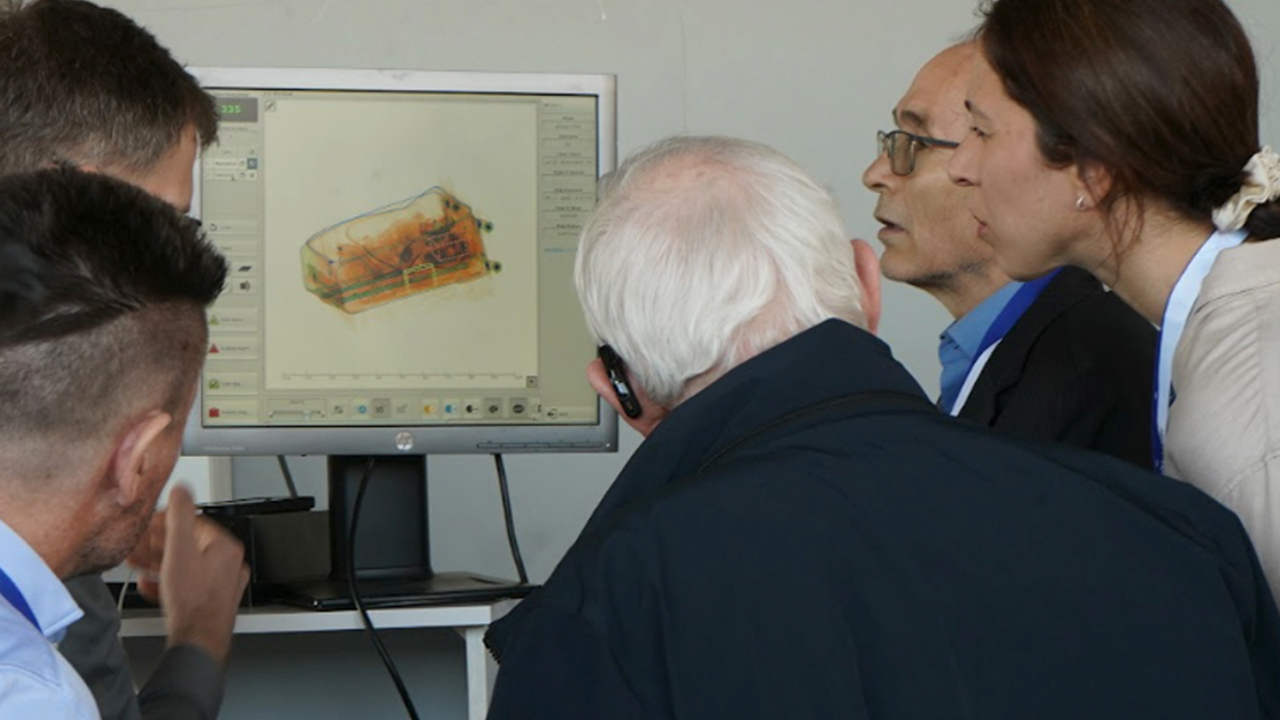
- Enhanced Scanning & Threat Detection: X-ray absorption analysis combined with AI object-recognition algorithms to assist in identifying concealed threat categories, including narcotics and illegal contraband.
- Digital Twin & Risk Assessment Tools: An operational simulation platform featuring 2D and 3D airport modeling, knowledge graphs, and external data integration to help customs teams visualize workflows, evaluate system placement, and analyze “what-if” operational scenarios.
Tested and Validated in Live Airport Environments
To evaluate the system under real-world constraints, the consortium executed end-to-end field trials and operational demonstrations at two European airports:
- Billund Airport (Denmark – January 2026): This use case validated end-to-end platform communications, data exchanges, and front-end user interfaces during synthetic “low-risk” and “high-risk” non-Schengen flight scenarios (learn more).
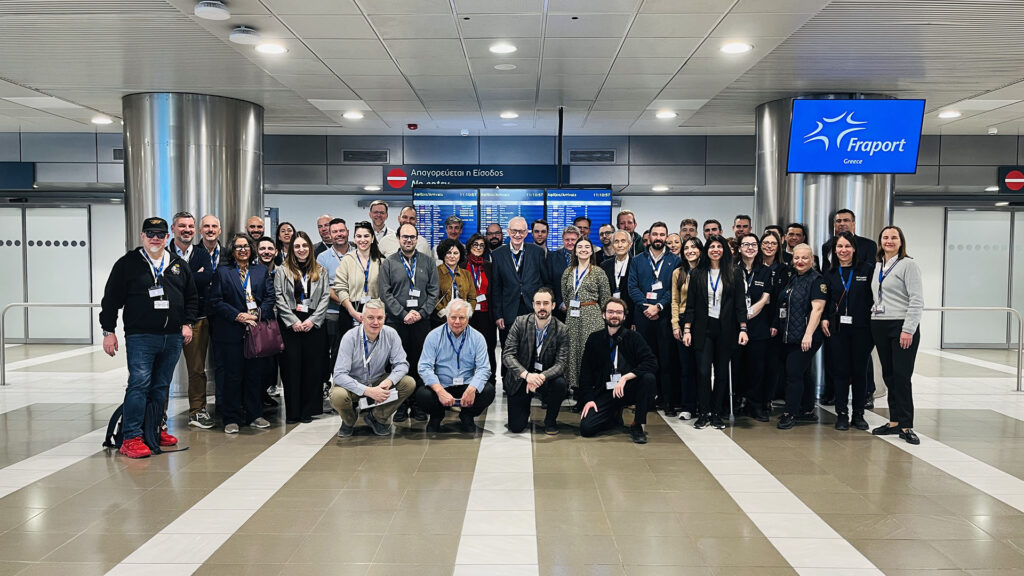
- Thessaloniki “Makedonia” Airport (Greece – March 2026): This use case integrated camera arrays, GDPR-compliant video data pipelines, an XCT scanner, and digital twin visualizations into live terminal zones across an intensive five-day operational demonstration (learn more).
Capacity Building and Standardization
A central focus of BAG-INTEL was ensuring that technical innovations translated into actionable, operationally viable tools for end-users:
- Targeted Training Curricula: The project hosted a series of online and on-site training workshops ahead of major field deployments, bridging technical development and practical execution for customs, police, and border guard authorities.
- Standards and Policy Research: The consortium launched anonymous survey campaigns exploring standards in customs operations, law enforcement, AI, data privacy, and risk management. Findings from these surveys will help shape future standardization activities and policy recommendations for European Union institutions.
Post-Project Roadmap: Taking Solutions to Market
While the funded R&D phase has closed, the attention of the partners now turns to deployment. The consortium established clear pathways for the project’s 4 Key Exploitable Results (KERs):
- Traceable Decision Support
- Tagless Bag Re-Identification
- Advanced Threat Detection
- Digital Twin & Secure Infrastructure
Designed as modular, interoperable components, these solutions can be introduced progressively or adopted as an integrated customs-control ecosystem. Expected routes to market include software licensing, system integrator partnerships, and hybrid on-premises deployments tailored to national security and data-governance standards.
The research and development phase may be coming to an end, but the next step is turning these results into deployable solutions that can be tested, adopted, and put to work in real-world customs environments across Europe and beyond.
Thank you to all consortium partners, customs officers, airport operators, and other stakeholders who contributed to the success of BAG-INTEL over the past three years!