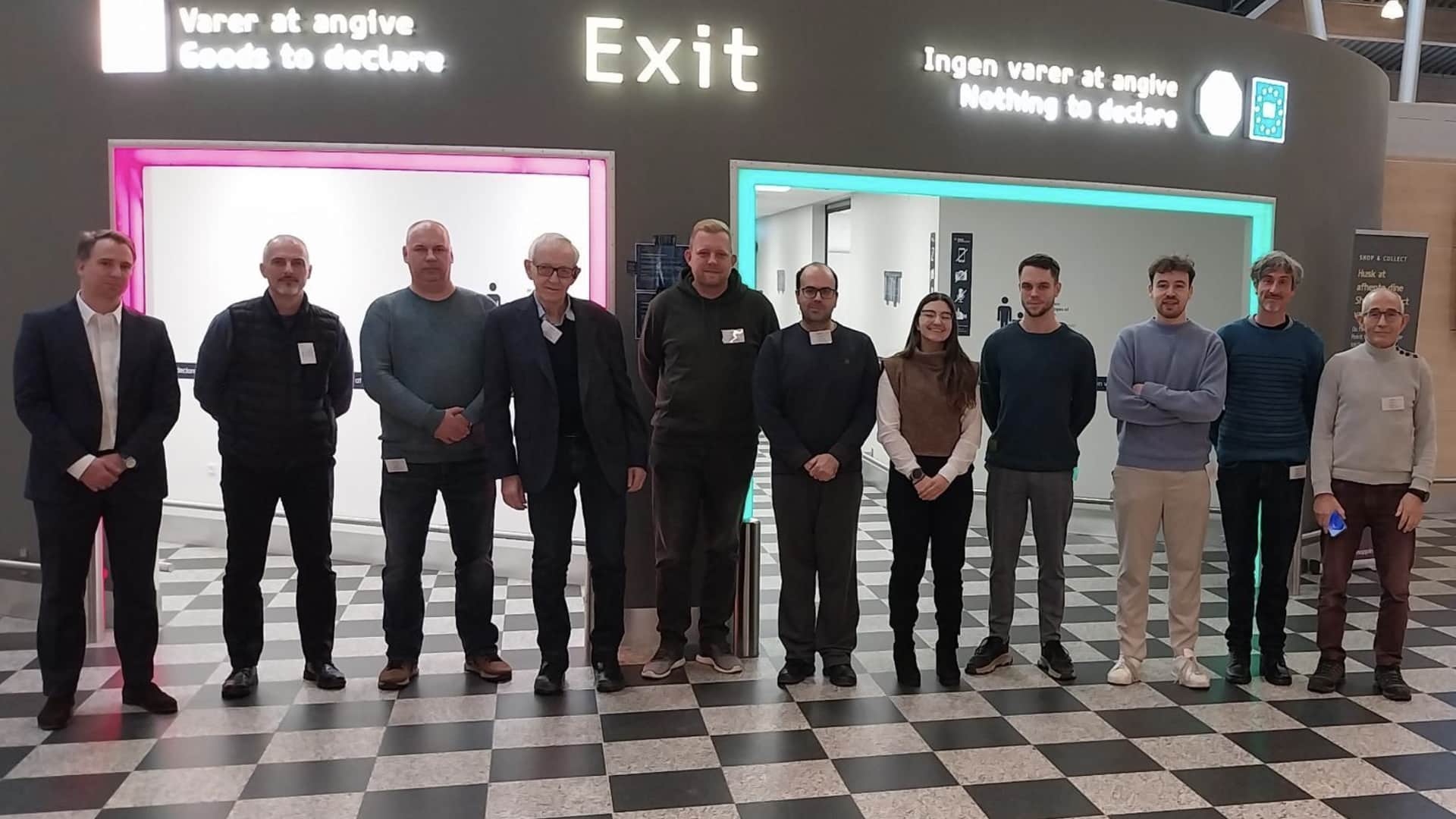
On January 26-29, 2026, the BAG-INTEL Consortium assembled at Billund Airport, Denmark, to actively participate in the activities at the core of BAG-INTEL’s Integrated Platform demonstration in the operational framework of the 1st Use Case deployment.
During the 4-day long 1st Use Case deployment, the technical partners (Netcompany, Commissariat à l’énergie atomique et aux énergies alternatives, PSI Logistics GmbH, Smiths Detection Germany GmbH, University of Granada, Legind Technologies A/S, EXUS, National Institute of Applied Sciences of Rouen, STAM S.r.l) along with their end-user counterparts (Spanish Tax Agency , Guardia Civil, Estonian Tax and Customs Board, Independent Authority for Public Revenue – IAPR, Hellenic Police) and all other affiliated entities (Martel GmbH , DBC Diadikasia, Conceptivity, Institute of Communication and Computer Systems), led by Legind Technologies (BAG-INTEL Coordinators), The Center for Security Studies – KEMEA (BAG-INTEL 1st Use Case deployment coordinators) and the local customs authorities, participated in complementary capacities in the inaugural end-to-end integrated platform testing and validation of the BAG-INTEL pipeline comprising both hardware and software components (luggage reidentification, risk indicator score/s, x-ray visuals, integrated front-end interface), working together towards improving the checked luggage intrusive inspections accuracy and Customs personnel minimized mobilization needs, while maintaining a seamless traveling experience for passengers.
In brief, days 1-2 (26-27 January) were dedicated to the conduction of technical checks and, subsequently, fine-tuning of deployed subsystem components functioning in three different states, namely: individual subsystem, integration (subsystem-to-subsystem exchanges) and, lastly, end-to-end integrated platform testing. Upon validating the functional status of subsystems and their data exchanges, the BAG-INTEL Consortium proceeded to complete an on-site training workshop on Day 3 (28 January), where all involved end-users engaged in fruitful exchanges with each other and the project’s technical partners, familiarizing with the integrated platform and the ways it could better serve the needs of customs services (i.e.,front-end user interface intelligibility, etc.).
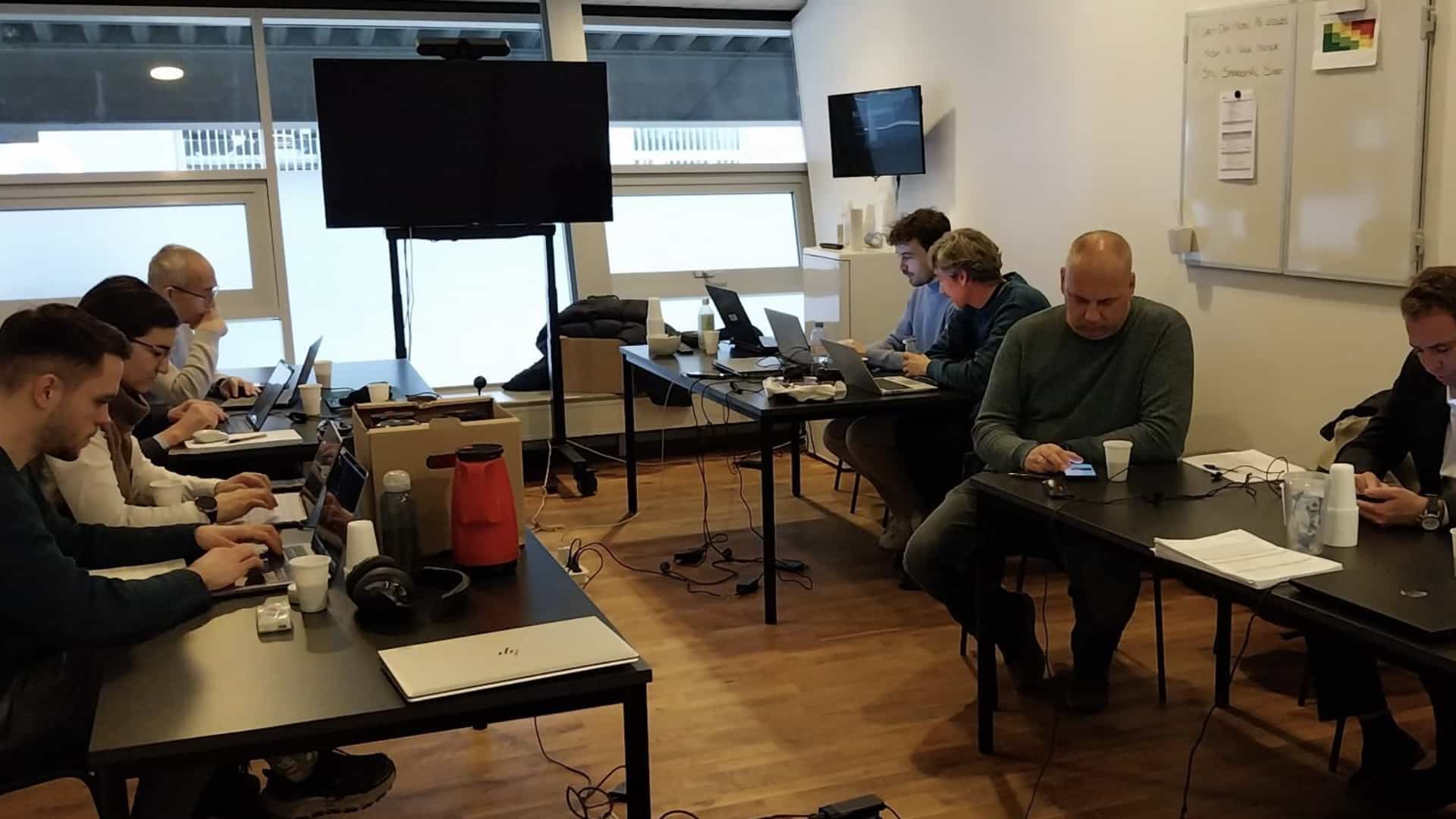
Finally, on Day 4 (29 January), the demonstration of BAG-INTEL’s integrated platform was carried out, by way of two scenario executions involving synthetic low-risk and high-risk non-Schengen flights, where end-users from the local airport took center stage in interacting with the platform as front-end user interface handlers and fictitious actors/passengers for the generated synthetic flights, with the final objective of seeing through more accurate intrusive luggage inspections while keeping the human actors (customs officers) in-the-loop, thus highlighting an efficient way of merging the professional experience of customs with the added-value brought about by the BAG-INTEL integrated platform. In the aftermath of the scenario iterations, all of 1st Use Case participants were eventually engaged in a constructive discussion touching upon scenario outcomes and suggestions to improve the BAG-INTEL integrated platform’s offered functionalities.
Summing it all up
In conclusion, the results stemming from BAG-INTEL’s 1st Use Case deployment and the scenario iterations that followed, can be summed up as such:
- The BAG-INTEL integrated platform was deployed and tested in an end-to-end manner, thus verifying that the technical pipeline of subsystem exchanges is indeed fully functional when utilized in a fully operational airport environment.
- The BAG-INTEL affiliated end-users gained an opportunity to familiarize themselves with the deployed integrated platform both in a fully operational environment (Billund Airport) and through scripted scenario iterations, to help them grasp a better idea of BAG-INTEL’s inherent added-value.
- The BAG-INTEL technical partners were provided with an opportunity to exchange feedback with each other, eventually pointing to targeted areas for subsystem fine tuning and improvements (i.e., algorithm training, risk computations, front-end user interface upgrades, etc.) ahead of subsequent demonstration instances.
As a next step, the BAG-INTEL project will continue to work on improving the delivered integrated platform together with scenario conceptualization and analysis on the basis of findings from the inaugural use case tested in Billund, aiming to achieve a fully operational status in time for the 2nd Use Case demonstration, scheduled to take place in the premises of Thessaloniki Airport “Makedonia” (Greece) in approximately one month from now (March 2026).