
Bringing an integrated artificial intelligence system into live airport environments requires more than just advanced software—it demands a vital connection between technology developers and the frontline border professionals who will rely on it. Within BAG-INTEL, this crucial bridge is built through dedicated system testing, user training, and pilot demonstrations designed to validate technologies through end-user-centered testing.
Leading this effort is KEMEA (the Center for Security Studies), a scientific, research, and consultative think-tank under the Hellenic Ministry of Citizen Protection. Specializing in tailored analyses of security topics and strategic policy formulations—such as hybrid crime prevention, civil protection, and integrated border management—KEMEA brings over two decades of experience in turning high-level concepts into empirical practice.
In BAG-INTEL, KEMEA oversees the planning, deployment, and evaluation of all activities linked to validating the integrated platform—specifically hosting end-user training workshops and executing real-world airport demonstrations.
Meet the Team Behind the Demonstration Planning
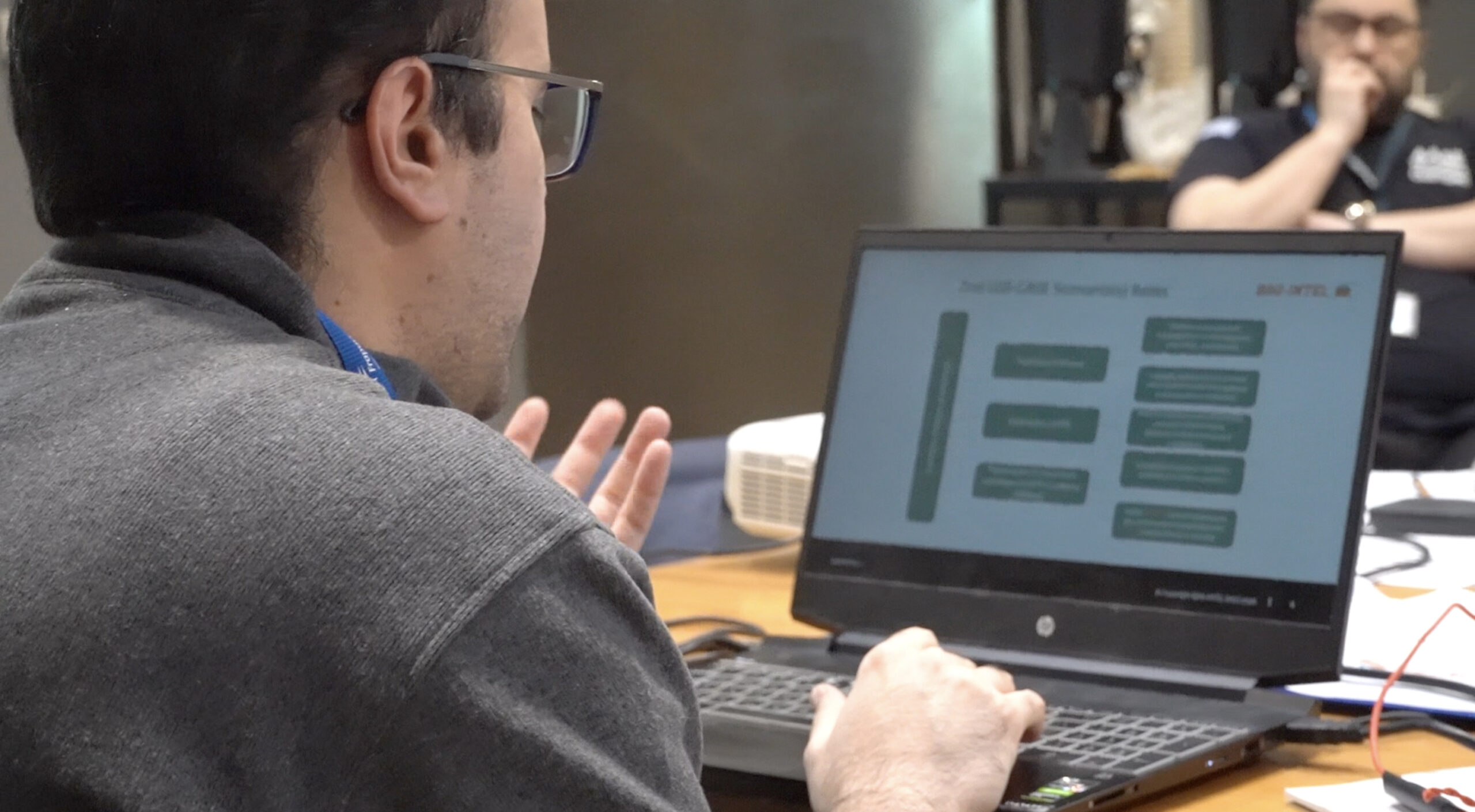
KEMEA’s work is driven by three Senior Research Associates with backgrounds across border management and security research:
- Dimitrios Myttas, Hellenic Army Colonel (Ret.), with a scientific orientation towards ICT Innovations & Military War Gaming & Planning Teaching among others) currently serving as the Head of Border Security & Control Sector at KEMEA, overseeing the progress of the dedicated KEMEA’s team members ongoing work with the BAG-INTEL Project.
- Mirela Rosgova (Survey Engineer with a research focus on cartography, border protection, and criminology) serves as KEMEA’s Project Manager for BAG-INTEL, directing all planning and implementation activities.
- Ioannis Athanasakis (Criminologist focusing on border protection and transborder crime hybrid threats) brings expertise in evaluating operational roles and threat scenarios.
Reflecting on KEMEA’s role in guiding the pilot demonstrations, Mirela Rosgova explains:
“In leading the pilot proceedings, KEMEA partners were to ensure that all innovations materializing under the umbrella of BAG-INTEL would be realistically assessed through operationally-oriented scenario reenactments and through the forming of synergies with the project’s LEAs and Customs Agencies. In having done so, we have managed to ascertain that the BAG-INTEL integrated platform developed into a practical as well as effective solution to be on par with end-users’ operational requirements and the addressing of daily routine needs.”
— Mirela Rosgova, Project Manager at KEMEA
Designing the Training Blueprint
Deploying the BAG-INTEL platform for live demonstrations required a structured, two-phase strategy to manage administrative proceedings, partner onboarding, component status checks, and technical sessions prior to final validation.
In the first quarter of 2026, KEMEA collaborated with the Department of Policing at HFOeD (University of Applied Sciences for Public Service in Bavaria) to plan the preparatory steps for onboarding end-users and consortium members. Working closely with technical partners, they compiled comprehensive reading and audiovisual guides tailored to customs agencies, border guards, and law enforcement authorities into a compact training framework:
- Booklet #1: Details all aspects of the BAG-INTEL platform architecture, subsystem features, and capacities.
- Booklet #2: Outlines specific scenario conceptualizations to guide technology validation during scheduled deployments.
These self-paced guides ensured that end-users achieved the operational readiness necessary to participate seamlessly in realistic scenario reenactments at selected EU airport venues.
Guiding HFOeD’s training efforts is Philip Schneider, a Researcher at the University of Applied Sciences for Public Service in Bavaria (Department of Policing) with a focus on European security research, law enforcement technologies, organized crime, and cybersecurity.
Philip emphasizes the double significance of training prior to live demonstrations:
“The developed innovative technologies are in place to support, certainly not replace, the end-users by becoming integrated in their operational decision-making cycle. A successful technological innovation concept commences with the grasping of law enforcement’s operational reality of things, before proceeding to develop and test its features in conjunction with the very practitioners that are going to leverage it for their duties.”
— Philip Schneider, Researcher at HFOeD
Structure of the Hybrid Training Curricula
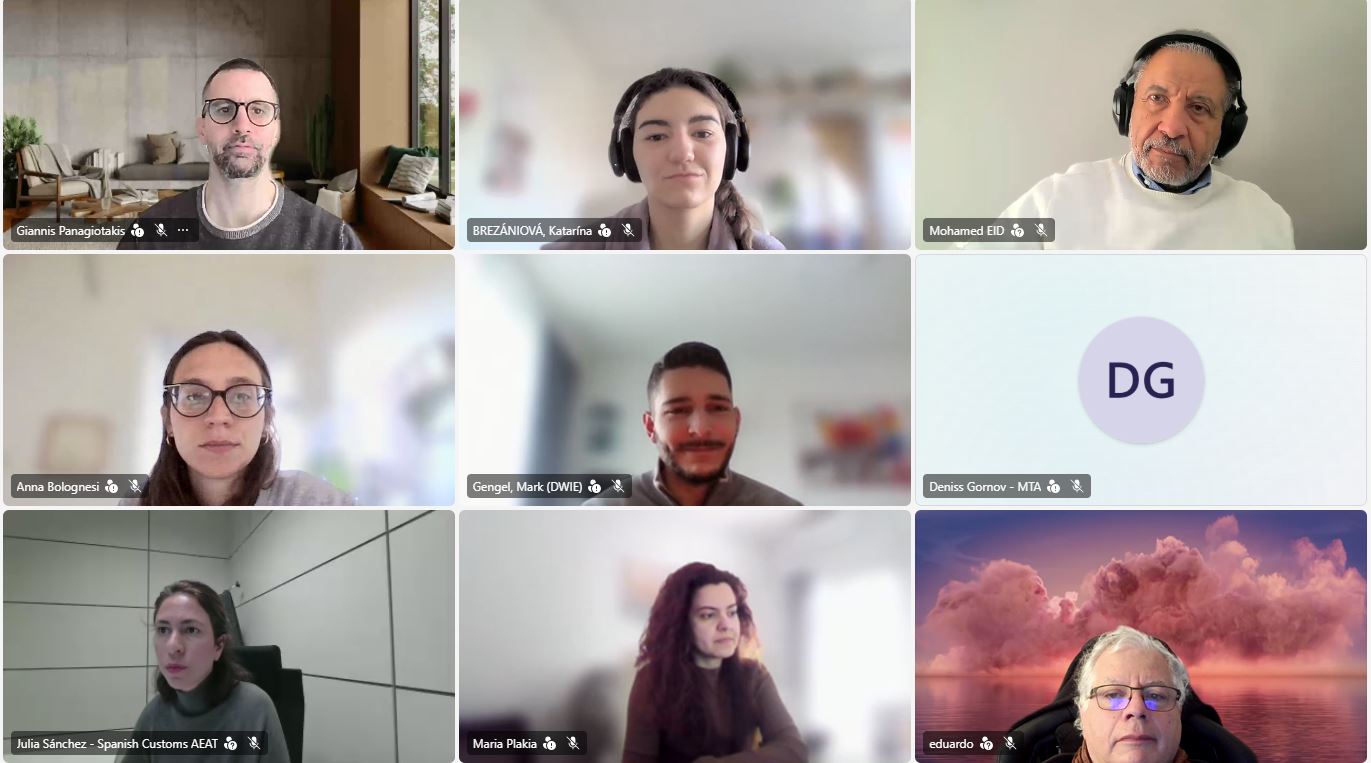
To pave the way for live airport deployments, KEMEA and HFOeD hosted a pair of Hybrid Training Curricula held both before and during each scheduled demonstration. Each curriculum was organized into three core clusters:
| Training Cluster | Scope & Focus |
|---|---|
| Part A: Scenario Methodological Framework | Introduces training objectives, scenario conceptualizations analyzing phase-by-phase actions, and legal/ethical compliance requirements governing live demonstrations. |
| Part B: Component Capabilities & Integrated Platform | Details dedicated subsystem capacities (algorithm design, training modules, outputs) and how the integrated platform architecture exchanges data across subsystems. |
| Part C: Interactive Q&A Session | Features active discussions between technical partners, end-users, and subject-matter experts, allowing actionable feedback to reach developers and resolving user inquiries. |
From Planning to Validation in European Airports
The combination of compiled training materials and dedicated scenario sessions allowed technical partners, end-users, and subject-matter experts to gain complete clarity on operational risk mitigation, platform capabilities, and scenario concepts.
This thorough preparation enabled a smooth transition from the planning and integrated testing phases to full scenario reenactments at local airport facilities in Billund (Denmark) and Thessaloniki “Makedonia” (Greece).
As KEMEA Associate Ioannis Athanasakis summarizes:
“In a nutshell, the bulk of training activities has succeeded in having both technical partners, end-users and subject-matter experts grasp a comprehensive understanding of their roles and what is to be expected of them during the deployment and validation series.”
— Ioannis Athanasakis, Criminologist & Research Associate at KEMEA